Tokyo Allocates 700 Million Yen for Matchmaking Initiatives
The Tokyo Metropolitan Government is significantly increasing its budget for matchmaking programs, allocating approximately 700 million yen for fiscal 2026. This investment, which is more than double the previous year's budget, aims to help single residents find marriage partners and address Japan's declining birthrate through various organized social events and an AI-powered matchmaking application.
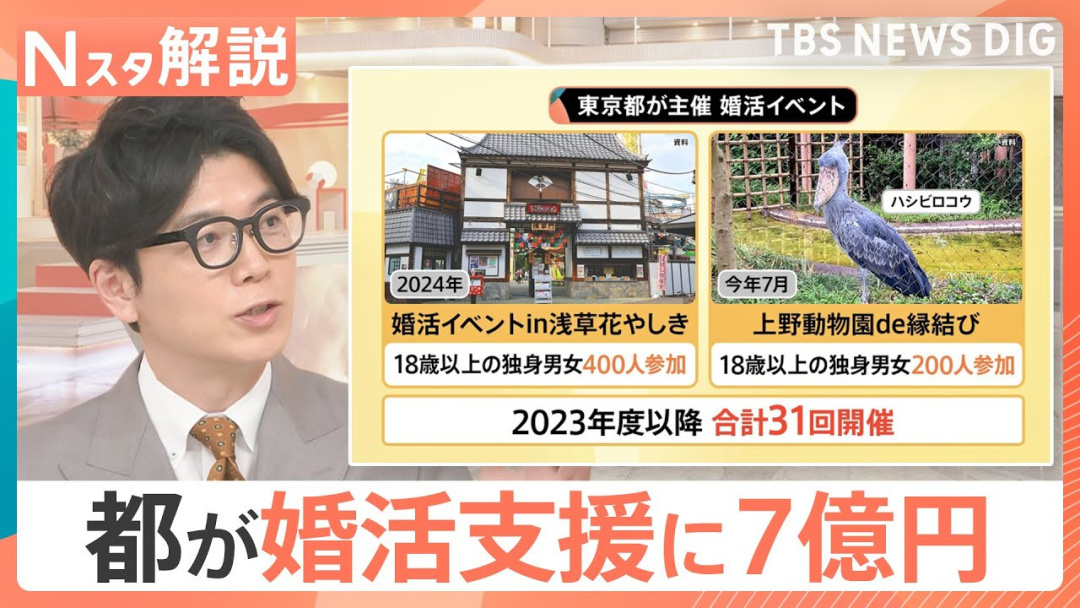
The Tokyo Metropolitan Government is ramping up its efforts to assist single residents in finding marriage partners by allocating approximately 700 million yen to matchmaking programs for fiscal 2026. This budget is more than double the amount set aside in the previous fiscal year, reflecting the capital's commitment to addressing its declining birthrate through organized social events and innovative matchmaking technology, including artificial intelligence.
Among the initiatives being launched are diverse events designed to facilitate social interactions among singles. These include exclusive gatherings at amusement parks, zoo visits, and a unique running event dubbed "Tokyo RUNdez-vous," which aims to create a relaxed atmosphere for participants to meet potential partners. The running event successfully attracted 60 individuals aged 20 to 40, highlighting the appeal of such informal settings for matchmaking.
In 2024, the metropolitan government organized a matchmaking event at Hanayashiki amusement park in Asakusa, which saw participation from 400 unmarried individuals aged 18 and older. Another event held at Ueno Zoo in July 2026 drew 200 participants, who had the chance to engage with each other while observing animals, including the zoo's well-known shoebill bird. The popularity of these events indicates a strong demand for opportunities to connect outside of traditional dating scenarios.
Since fiscal 2023, Tokyo has hosted 31 matchmaking events, attracting around 3,700 participants. Officials report that these events often receive more applications than available spots, with cancellations being relatively rare. This suggests that attendees are genuinely interested in finding partners.
In addition to in-person gatherings, the Tokyo government has introduced an AI-powered matchmaking service called "TOKYO Enmusubi," which was launched in September 2024. This application requires users to complete a questionnaire that assesses their values and preferences, after which artificial intelligence recommends potentially compatible partners. By the end of September 2026, approximately 17,000 people had registered for this service.
Unlike conventional dating apps, participants in Tokyo's program must provide an official certificate confirming their unmarried status and agree to seek marriage, signing a declaration of commitment before registering or attending events. This requirement emphasizes the program's focus on serious relationships.
The metropolitan government's increased investment in marriage support is notable, especially when compared to neighboring prefectures. For instance, Kanagawa Prefecture has allocated 42.75 million yen for its "Koi Kana!" matchmaking project for 2026, while Saitama Prefecture has set aside only 8.91 million yen for similar initiatives. This disparity underscores Tokyo's dedication to bolstering marriage support as part of its broader demographic strategy.
Addressing Barriers to Matchmaking Participation in Tokyo
The motivation behind these initiatives is to bridge the gap between individuals' desires to marry and their actual engagement in matchmaking activities. A survey conducted by the Tokyo Metropolitan Government in 2022 revealed that 69.3% of respondents who wished to marry within a year were not actively participating in matchmaking efforts, citing reasons such as uncertainty about how to start searching for a partner and the high costs associated with matchmaking services. Tokyo's programs aim to eliminate these barriers by providing accessible opportunities for residents to meet others who share their marriage intentions.
This initiative also serves as a response to Japan's declining birthrate, with Tokyo being the only prefecture in the country with a total fertility rate below 1.0, recorded at 0.96 children per woman in 2025, compared to the national average of 1.14. While marriage does not automatically lead to childbirth, the metropolitan government views support for relationships and marriage as a crucial element of its broader strategy to assist residents at various life stages.
Tokyo's approach combines matchmaking assistance with financial and practical support for pregnancy, childbirth, and parenting. For couples planning families, the government offers subsidies for fertility treatments, financial benefits during pregnancy, and assistance with the costs of painless childbirth. Families with children can also benefit from free childcare, reduced school meal expenses, and tuition assistance aimed at making high school education effectively free.
Despite the substantial investment, challenges remain regarding public awareness of these programs and their effectiveness. A survey conducted in 2025 found that more than half of respondents were unaware of the metropolitan government's matchmaking initiatives. Additionally, while the AI matchmaking service has reportedly facilitated 337 marriages over approximately two years, tracking the outcomes of participants from in-person events has proven difficult. This limitation means that while attendance and demand can be measured, the direct impact on marriage rates remains unclear.
Evaluating the Long-Term Impact of Marriage Support Programs
Improving public awareness and establishing better systems for collecting and publishing outcome data are critical challenges for the program's future success. The significant differences in funding between Tokyo and neighboring prefectures also raise questions about equity, particularly regarding access to comparable support in less affluent areas.
Ultimately, the effectiveness of marriage assistance programs hinges on broader social and economic conditions, including the ability of individuals to maintain careers and financial independence post-marriage. The capacity for women to continue working after marriage is a vital concern, underscoring the need for employment and family policies that complement matchmaking initiatives. Tokyo's expanded programs reflect a growing willingness among local governments to intervene in the early stages of family formation, but the real test will be whether these social gatherings and AI-assisted introductions can lead to lasting marriages and help reverse the capital's demographic decline.